
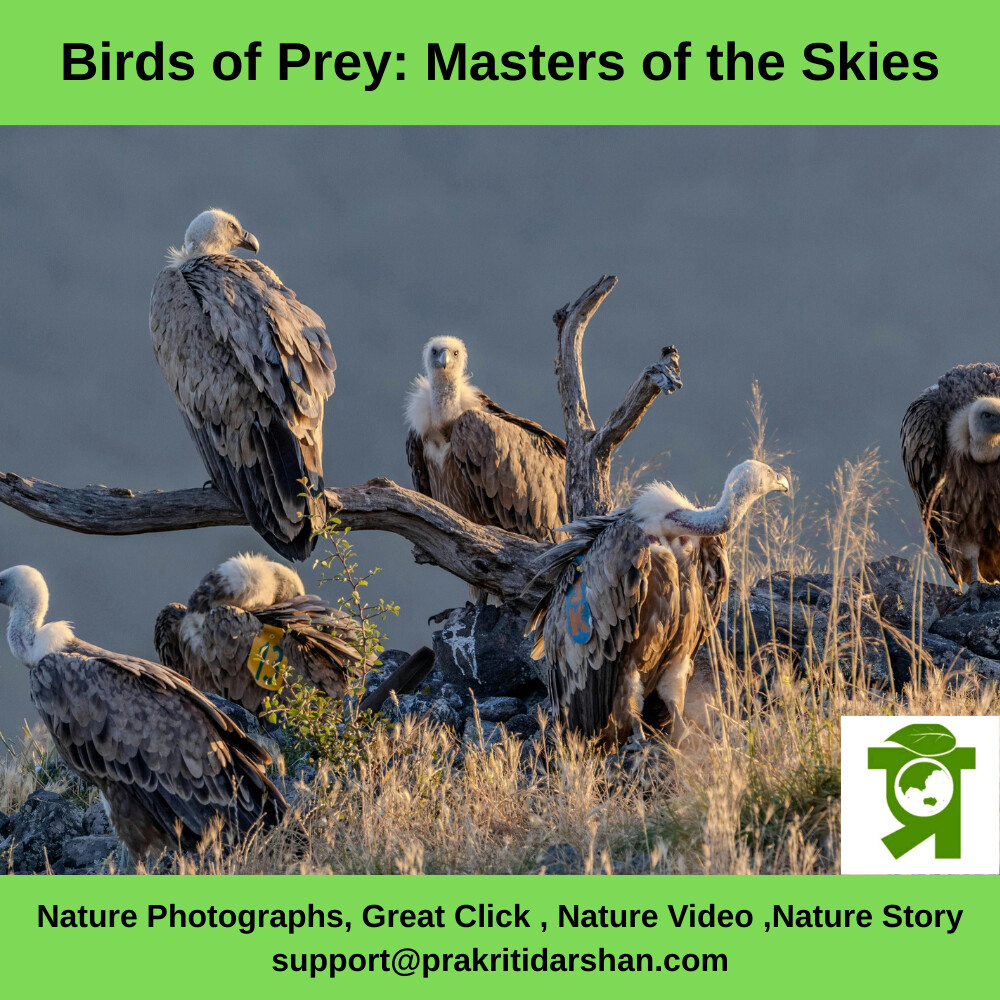
Birds of prey (also known as raptors) are among the most fascinating avian predators, playing vital roles in ecosystems around the world. Characterized by their hooked beaks, sharp talons, and keen vision, these birds include hawks, eagles, falcons, owls, and vultures. This article explores their classification, physical and ecological traits, scientific data (lifespan, diet, reproduction), geographical distribution, and the threats they face. Using recent studies and empirical data, it provides insight into how environmental conditions affect different raptor species, reviews types and their adaptations, and offers guidance on conservation. Finally, FAQs answer common questions, aiding both general readers and those seeking deeper understanding.
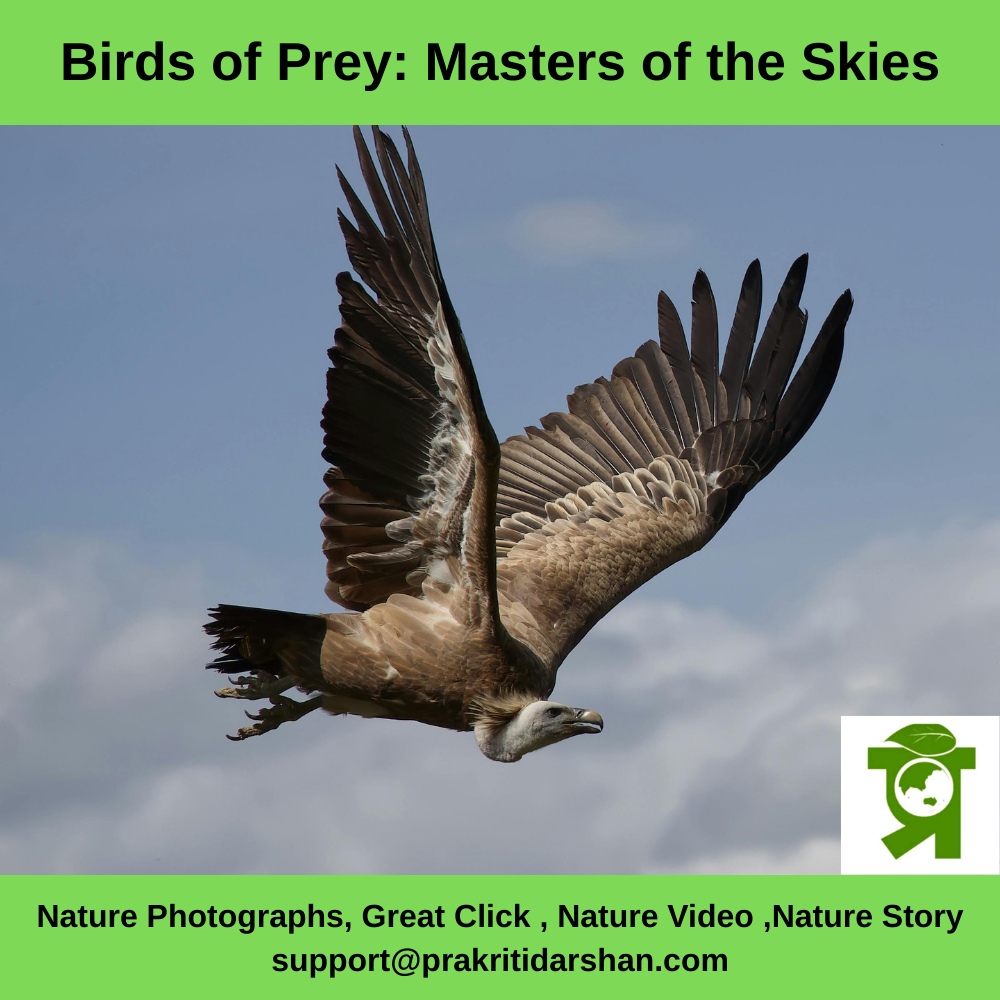

Table of Contents
1.Introduction
2.What Defines a Bird of Prey
3.Scientific Data on Birds of Prey
3.1Lifespan & Mortality Rates
3.2 Diet Composition
3.3 Reproduction & Growth
4.Geographical and Environmental Conditions
4.1Global Distribution
4.2Habitat Types & Climatic Factors
4.3 Regional Case Study: India
5.Types of Birds of Prey
5.1Diurnal Raptors (Falconiformes)
5.2Nocturnal Raptors (Strigiformes)
5.3 Specialized Types (e.g. scavengers like vultures, piscivores like ospreys)
6.Summary
7.Conclusion
8.Frequently Asked Questions (15+)
9.References
What Defines a Bird of Prey
Birds of prey (raptors) are birds that hunt and feed on other animals. Key defining features:
- Morphological traits: strong, hooked beaks; sharp talons; powerful feet; keen eyesight
- Behavioural traits: predation of vertebrates or large invertebrates; many are apex predators in their niches
- Temporal activity: some are diurnal (active by day), others nocturnal (by night)
Taxonomically, raptors are not in a single order — major groups include Falconiformes (hawks, eagles, falcons, vultures) and Strigiformes (owls). Some other birds sometimes included by function (if not strict taxonomy) are certain kite species, etc. (IFAW)
Scientific Data on Birds of Prey
Below are some data drawn from scientific studies.
Table 1: Lifespan, Mortality, and Reproductive Data
| Species / Group | Typical Lifespan (Wild) | Max Recorded Lifespan (Captivity) | Juvenile Mortality / Fledgling Survival | Reproductive Output (Clutch Size / Young per Year) |
| Large Eagles & Vultures | ~20–30 years (SeaWorld) | Up to ~45-50 years (captive bearded vulture) (Wikipedia) | High mortality in first year; fledging survival often low (varies by species) (Encyclopedia of Life) | Often 1-3 eggs; young depend long time on parents (Wikipedia) |
| Medium Raptors | ~10-20 years (SeaWorld) | Similar or slightly higher in protective environments | Mortality high post-fledging (~50-80% in some species) (Encyclopedia of Life) | Clutch size 2-4, depending on food, region (BC Wildlife Park) |
| Smaller Falcons / Hawks | ~5-15 years (SeaWorld) | In captivity sometimes more | Juvenile mortality very high first few months after fledging (Encyclopedia of Life) | Clutch sizes often 3-5; sometimes more frequent breeding if food abundant |
Table 2: Diet Composition & Habitat Data (Geographical / Environmental Conditions)
| Region / Study | Species / Sample Size | Main Prey Types | Habitat Types | Climatic / Geographical Conditions |
| Central India (2006-2015) | 6 raptor species (Circaetus gallicus, Spilornis cheela, Elanus caeruleus, Aquila fasciata, Falco chicquera, Nisaetus cirrhatus) (BioMed Central) | Reptiles dominated in C. gallicus, S. cheela, E. caeruleus; birds in A. fasciata, F. chicquera, N. cirrhatus (BioMed Central) | Forested, woodland, open forest edges; nesting site varied (trees, cliffs) (BioMed Central) | Tropical climate; seasonal variation; prey availability tied to habitat quality |
| Northeast India (Amur Falcon stopover) | Large number of Amur Falcons during migration (BioOne) | Insect orders; especially termites (Isoptera) highly dominant (~87%) (BioOne) | Stopover sites in Nagaland, Assam, Manipur; forested and agricultural mosaic | Migration timing matched with termite emergence; tropical monsoon climate with seasonal insect abundances |
| Europe (White-tailed Eagle in NE Poland, 2000-2023) | 24-year diet record for WTEs (MDPI) | Fish, birds, mammals; fluctuations over time; fish sometimes major proportion (MDPI) | Freshwater habitats, wetlands, rivers; near coastlines also | Temperate climate; changing environmental pressures influencing prey availability over decades |
Geographical and Environmental Conditions
4.1 Global Distribution
- Raptors are found on every continent except Antarctica. (IFAW)
- Diurnal raptors (e.g. eagles, hawks, falcons) tend to favour open regions for hunting — grasslands, deserts, forests edges, mountains, coastal zones.
- Nocturnal raptors (owls) prefer habitats with cover — forests, cliffs, woodlands — permitting stealth and ambush hunting.
4.2 Habitat Types & Climatic Factors
- Forest vs open habitats: Some species require dense forest (e.g. certain hawk-eagles), others need open areas for soaring and spotting prey.
- Water-linked habitats: Species like ospreys, sea eagles, fish eagles depend on water bodies.
- Climate/Seasonality: Migration happens in many raptors when food becomes scarce or temperature drops; insect emergences, breeding seasons tied to seasons.
4.3 Regional Case Study: India
- In central India, several raptor species show diet specialization: those in tree canopies or forested nests eat more reptiles; those in edges more birds. (BioMed Central)
- Migratory species such as the Amur Falcon use stopover regions in Northeast India to feed heavily on insects (e.g. termites) to build up energy reserves. (BioOne)
Types of Birds of Prey & Adaptations
5.1 Diurnal Raptors (Falconiformes)
- Hawks, eagles, falcons, kites, vultures.
- Adaptations: great vision (sometimes 4-5× human), soaring flight wings, powerful talons, strong beaks.
- Examples: Golden Eagle, Tawny Eagle (noted for hunting and scavenging behaviour) (Wikipedia)
5.2 Nocturnal Raptors (Strigiformes)
- Owls — barn owls, eagle-owls, etc.
- Adaptations: silent flight feathers, excellent hearing, large eyes, facial discs to collect sound, nocturnal hunting.
5.3 Specialized Types
- Scavengers: Vultures, bearded vultures that specialize in carrion and even bones. Example: Bearded Vulture eats mostly bones, using rocks to break them. (Wikipedia)
- Piscivores: Species that eat fish — e.g. ospreys, sea eagles.
- Insectivorous / Opportunistic: Some birds of prey shift diet seasonally — e.g. falcons taking large numbers of insects during migration. (BioOne)
Summary
Birds of prey are a diverse and crucial group of avian predators. Through a variety of ecological niches, they help control populations of various animals, serving as indicators of environmental health. Key scientific data reveal significant variation in lifespan, diet, reproductive strategies among species, often influenced by habitat, climate, and human pressures. Conservation of these species requires understanding their ecological needs, migration patterns, and threats.
Conclusion
“Birds of Prey: Masters of the Skies” are more than just beautiful or fearsome creatures; they are essential components of ecosystems globally. Protecting them means protecting prey populations, habitats, and migration corridors. Continued scientific monitoring of their diet, reproduction, lifespan, and geographical patterns is critical, especially in the face of climate change, habitat loss, pollution, and human-wildlife conflict. By fostering policies, preserving habitats, reducing harmful chemical usage, and encouraging awareness, we can help ensure their survival for future generations.
Frequently Asked Questions (FAQs)
- What are birds of prey?
Birds of prey (or raptors) are birds that hunt live prey (or scavenge) using sharp talons, hooked beaks, strong vision, and often powerful flight. - What is the difference between Falconiformes and Strigiformes?
Falconiformes are diurnal raptors (active during the day) like hawks, eagles, falcons; Strigiformes are nocturnal raptors (owls) that hunt in low light. - How many species of birds of prey are there?
There are over 560 species of raptors worldwide. (IFAW) - What is their conservation status globally?
Many raptor species are under threat: habitat loss, pollution, climate change. Around 18% are listed as vulnerable, endangered, or critically endangered; 13% near threatened; many with declining populations. (IFAW) - What determines their diet?
Diet depends on species’ size, habitat, prey availability, season, and sometimes behavior. Some are specialists (e.g. piscivores, insectivores), others are generalists. - How long do birds of prey live?
It varies: small falcons or hawks might live 5-15 years in wild; large eagles or vultures can live 20-30 years or more. In captivity, some reach 40-50+ years. (SeaWorld) - What are the main threats to birds of prey?
Habitat loss and degradation; poisoning (intentional or from environment), collision with human structures, illegal trade, climate change, prey decline. (IFAW) - Do birds of prey migrate?
Yes, many do. Migration often tracks food availability and climatic conditions. For example, Amur Falcons migrate large distances and use stopover sites in India to feed. (BioOne)
Frequently Asked Questions (FAQs)
- How do they reproduce?
Typically, raptors lay between 1-5 eggs per clutch, depending on species. Incubation, fledging, and parental care periods tend to be relatively long for large species. - What role do birds of prey play in ecosystems?
They help to control populations of rodents, insects, and other animals. They remove weak/sick individuals, contributing to ecological balance, and serve as bio-indicators of environmental health. - Can birds of prey live near human habitats?
Yes, some adapt well to human-altered environments, especially if prey is available (rodents, pigeons etc.). However, risks increase — collisions, poisoning, nest disturbance. - How is their vision different from humans?
Raptors often have much sharper vision, able to detect prey from great distances. Some have adaptations like more densely packed photoreceptors, large eyes, good color vision. - What conservation actions help birds of prey?
Protecting habitats, enforcing anti-poaching laws, reducing chemical pollutants (like pesticides), establishing protected areas, supporting wildlife corridors, public education. - Are all scavengers considered birds of prey?
Many scavengers (like vultures) are included because they are raptors that feed on dead animals rather than hunting live prey, but they share many anatomical and ecological traits of birds of prey. - What is the smallest bird of prey?
Some of the smallest are falconets and certain owls; wingspans might be around 25-30 cm, weight very small. Specific species will vary by region. (IFAW) - How do climate change and environmental change affect them?
Shifts in temperature, precipitation, and seasonal cycles affect prey availability, breeding times, migration routes. Habitat loss exacerbates these.
References
- “Birds of prey facts and conservation status | IFAW” — overview of global raptor species & threats. (IFAW)
- “Nutrition in Raptors – Management and Nutrition – MSD Veterinary Manual” — feeding requirements, diet amounts relative to body weight. (MSD Veterinary Manual)
- “Bearded vulture (Gypaetus barbatus)” — detailed diet, breeding, unique adaptations. (Wikipedia)
- “Diet and habitat affinities in six raptor species in India” — central India case data. (BioMed Central)
- “Prey Species in the Diet of the Amur Falcon (Falco amurensis) during Autumn Passage Stopover in Northeast India” — migration & diet on stopovers. (BioOne)
- “Changes in Avian Top-Predator Diet in the 21st Century in Northeast (NE) Poland” — feeding shifts over long term. (MDPI)
- “All About Raptors – Longevity & Causes of Death | United Parks & Resorts” — lifespan data. (SeaWorld)
Global Appeal for Support: Prakriti Darshan – Nature and Environment Magazine & Journal
Dear Respected Leaders, Organizations, and Changemakers,
At a time when the world faces unprecedented challenges of climate change, biodiversity loss, deforestation, pollution, and global warming, collective action has become the need of the hour. The responsibility of protecting our planet cannot rest on a few shoulders—it must be a shared mission across governments, global institutions, businesses, academia, and communities.
About Us
Prakriti Darshan – Nature and Environment Magazine (www.prakritidarshan.com) and Prakriti Darshan :International Journal of Environment Science & Multidisciplinary Studies (www.prakritidarshanjournal.com) are global initiatives dedicated to:
- 🌱 Promoting environmental awareness and education.
- 🌎 Supporting United Nations Sustainable Development Goals (SDGs).
- 🦋 Highlighting the role of climate action, biodiversity conservation, renewable energy, eco-friendly practices, and sustainable living.
- 📚 Encouraging research and publications through our international journal.
- 🌳 Driving grassroots action through plantation, seminars, and workshops in schools, institutions, and communities.
Our Global Objectives
We aim to:
- Publish and distribute our environmental magazine free of cost worldwide to increase public awareness.
- Extend the magazine into multiple languages to reach diverse populations.
- Organize environmental seminars, conferences, and workshops both online and offline at schools, universities, and community levels.
- Build a platform for research, policy dialogue, and public participation in environmental conservation.
Our Humble Appeal
We invite Governments, UNEP, UNDP, UNESCO, FAO, IUCN, World Bank, international NGOs, corporates, green businesses, and philanthropists to come forward and strengthen this movement by:
✅ Sponsorship & Advertisements – Support us in reaching millions with environmental knowledge.
✅ Membership Programs – Join our network of eco-conscious individuals and organizations.
✅ Funding Support – Help us distribute Prakriti Darshan Magazine worldwide free of cost.
✅ Collaborations – Partner with us to host environmental events, campaigns, and research projects.
✅ Publishing with Us – Academics, researchers, and writers are invited to publish in our journal to spread innovative ideas globally.
Why Support Us?
By supporting Prakriti Darshan, you directly contribute to:
- SDG 4: Quality Education – spreading environmental education.
- SDG 13: Climate Action – mobilizing communities against climate change.
- SDG 15: Life on Land – promoting biodiversity conservation and plantation drives.
- SDG 17: Partnerships for the Goals – building a global movement through collaboration.
Together, We Can Create Change
Your support will help us expand our reach globally, develop multi-language editions, train young eco-leaders, and inspire millions to protect our only home—Planet Earth.
🌿 Let us join hands to create a world where environment and humanity coexist in harmony.
📩 Contact us through our portals:
- 🌐 www.prakritidarshan.com
- 🌐 www.prakritidarshanjournal.com
- WhatsApp :+91-8191903650 & +91-8191903651
- E mail : support@prakritidarshan.com & editor@prakritidarshanjournal.com
📢 Join the movement – Sponsor, Advertise, Become a Member, Publish, and Support Awareness Campaigns.
👉 Prakriti Darshan is not just a magazine—it is a voice for the planet. With your partnership, we can make it louder, stronger, and global.
Click for more information
- Visit www.prakritidarshan.com for Free Magazine ,Free membership benefits ,offered price magazine @ Rs.1 or Rs.11 only and more ……
Donate for “Hari Ho Vashundhara & Har school Hariyali “ Plantation campaign Associated Partner NGO :GDSS NGOwww.gdssngo.org
🎗️Sponsor Prakriti Darshan Magazine – Support our environment mission.
📚 Explore the Environment Magazine – Read our latest and past issues.
✍️ Read Editor’s Article or Blog – Insightful thoughts from our editorial desk.
🌱 Join Membership – Be part of India’s leading green community.
🤝 Become an NGO Impact Story Partner – Share your grassroots impact nationwide.
🏢 Become a Company Partner – Showcase your CSR, ESG, or sustainability work.
👤 Become an Individual Partner – Volunteer, write, and raise your green voice.
📢 Advertise with Us – Reach eco-conscious readers across India.
BALA DATT SHARMA,
MANAGING EDITOR ,
PRAKRITI DARSHAN-NATURE AND ENVIRONMENT MAGAZINE