

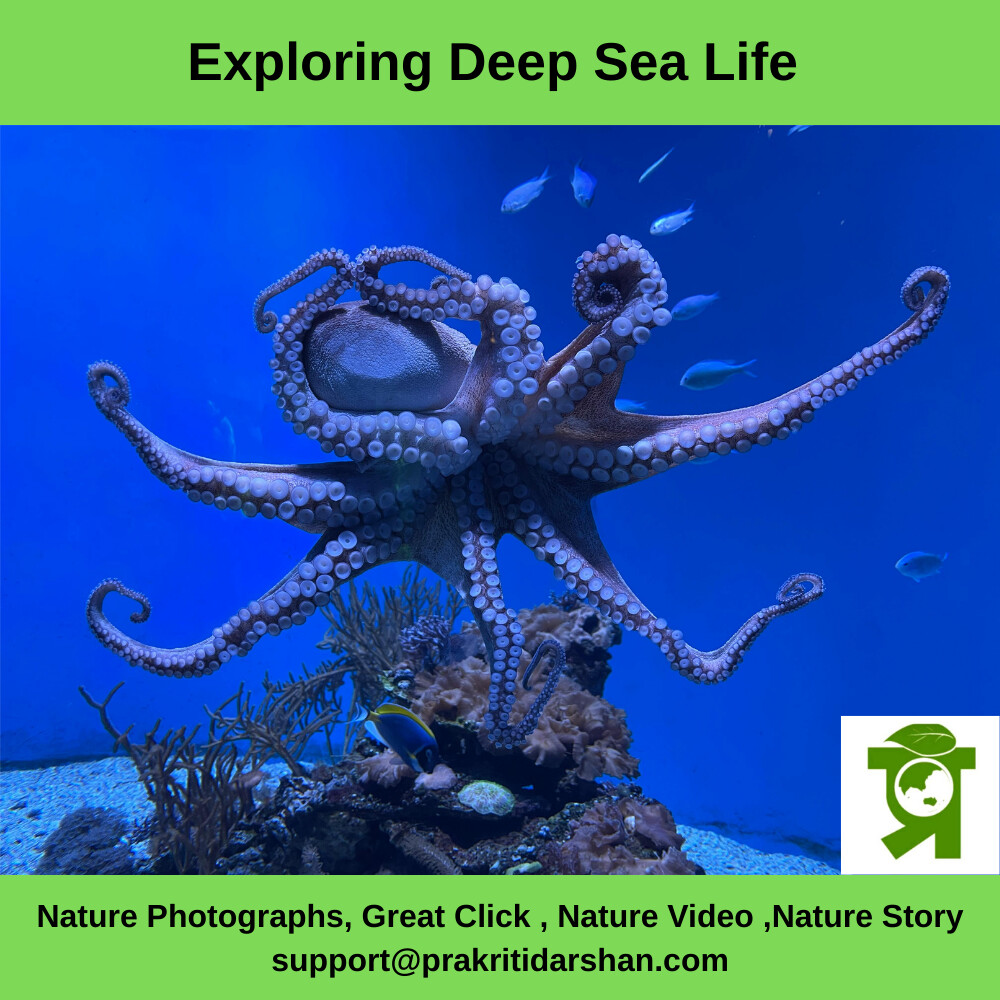
Deep sea life remains one of the least explored and most fascinating aspects of our planet. Stretching thousands of meters below the ocean surface, this ecosystem thrives in extreme conditions—intense pressure, complete darkness, freezing temperatures, and scarce food sources. Yet, life has adapted in remarkable ways, from bioluminescent organisms to giant squids and tube worms living near hydrothermal vents. This article explores the biology, geography, adaptations, and importance of deep sea organisms while addressing the role of deep sea ecosystems in global biodiversity, climate regulation, and sustainable development.
Table of Contents
- Introduction to Deep Sea Life
- The Depth Zones of the Ocean
- Extreme Environmental Conditions
- Adaptations of Deep Sea Organisms
- Bioluminescence: Light in Darkness
- Major Species of Deep Sea Life
- Hydrothermal Vents and Cold Seeps
- Scientific Data on Deep Sea Biodiversity
- Human Impacts on Deep Sea Ecosystems
- Conservation Challenges and Policies
- Importance of Deep Sea in Climate Balance
- Future Research and Technologies
- Summary
- Conclusion
- Frequently Asked Questions (FAQs)
- References
1. Introduction to Deep Sea Life
The deep sea begins at depths greater than 200 meters (656 feet), where sunlight no longer penetrates. It covers more than 65% of Earth’s surface but remains largely uncharted. Deep sea life includes microscopic plankton, strange fishes, crustaceans, mollusks, and unique bacteria that thrive under extreme conditions.
2. The Depth Zones of the Ocean
Scientists divide the ocean into distinct zones:
- Mesopelagic Zone (200–1,000 m) – Twilight zone with faint light.
- Bathypelagic Zone (1,000–4,000 m) – Total darkness.
- Abyssopelagic Zone (4,000–6,000 m) – Near freezing, high pressure.
- Hadalpelagic Zone (6,000–11,000 m) – Deep ocean trenches.
3. Extreme Environmental Conditions
Deep sea organisms must survive:
- Pressure exceeding 1,000 times atmospheric pressure.
- Temperatures near 0–3°C (32–37°F).
- Complete darkness beyond 1,000 meters.
- Limited food, mostly from sinking organic matter (“marine snow”).
4. Adaptations of Deep Sea Organisms
Life in the deep sea has evolved extraordinary traits:
- Bioluminescence for communication and hunting.
- Slow metabolism to survive with little food.
- Gigantism (giant squids, amphipods) as pressure adaptation.
- Enhanced sensory organs for detecting movement or faint light.
5. Bioluminescence: Light in Darkness
Nearly 90% of deep sea organisms produce light through chemical reactions. This light serves for:
- Attracting prey (anglerfish).
- Communication (squid).
- Camouflage against faint light from above.
6. Major Species of Deep Sea Life
- Giant Squid (Architeuthis dux)
- Anglerfish
- Fangtooth Fish
- Vampire Squid
- Gulper Eel
- Giant Tube Worms (near hydrothermal vents)
7. Hydrothermal Vents and Cold Seeps
These unique ecosystems, discovered in the 1970s, host life forms powered by chemosynthesis instead of sunlight. Bacteria convert hydrogen sulfide or methane into energy, supporting tube worms, mussels, and crabs.
8. Scientific Data on Deep Sea Biodiversity
| Ocean Zone | Depth Range (m) | Temperature (°C) | Notable Life Forms | Pressure (atm) |
| Mesopelagic | 200–1,000 | 5–10 | Lanternfish, squids, shrimp | 20–100 |
| Bathypelagic | 1,000–4,000 | 2–5 | Anglerfish, gulper eels | 100–400 |
| Abyssopelagic | 4,000–6,000 | 2–3 | Sea cucumbers, giant amphipods | 400–600 |
| Hadalpelagic | 6,000–11,000 | 1–2 | Snailfish, amphipods, microbes | 600–1,100 |
9. Human Impacts on Deep Sea Ecosystems
- Deep sea mining threatens fragile habitats.
- Plastic pollution has been found in the Mariana Trench.
- Climate change alters oxygen levels and food availability.
- Overfishing of species like orange roughy disrupts balance.
10. Conservation Challenges and Policies
International organizations, including UNESCO and IUCN, stress the need for protecting deep sea ecosystems. Policies like UNCLOS (United Nations Convention on the Law of the Sea) regulate deep sea resource exploitation.
11. Importance of Deep Sea in Climate Balance
- Acts as a carbon sink, absorbing atmospheric CO₂.
- Maintains nutrient cycles.
- Supports global biodiversity with unique species.
12. Future Research and Technologies
- ROVs (Remotely Operated Vehicles) and AUVs (Autonomous Underwater Vehicles) expand exploration.
- Deep-sea submersibles like Alvin help discover new species.
- Genetic research may unlock medical breakthroughs.
13. Summary
Deep sea life is an extraordinary world of adaptation, survival, and mystery. Despite harsh conditions, it sustains ecosystems critical for Earth’s health. Yet, human activities threaten its balance, demanding urgent conservation efforts.
14. Conclusion
The deep sea is not just a hidden world but a lifeline for planetary stability. Protecting this fragile ecosystem is crucial for biodiversity conservation, climate resilience, and future scientific discovery. Unlocking its secrets can help humanity in ways yet unknown.
15. Frequently Asked Questions (FAQs)
Q1. What is considered deep sea life?
Deep sea life refers to organisms living below 200 meters where sunlight cannot penetrate.
Q2. How deep is the deepest part of the ocean?
The Mariana Trench reaches nearly 11,000 meters (36,000 feet).
Q3. Do plants exist in the deep sea?
No, photosynthesis is impossible due to the absence of sunlight.
Q4. What do deep sea animals eat?
They consume marine snow, dead organisms, and prey on each other.
Q5. Why are some deep sea creatures bioluminescent?
To attract prey, communicate, and avoid predators.
Q6. How do fish survive the extreme pressure?
Their flexible bodies and special proteins prevent cell damage.
Q7. What is the largest known deep sea animal?
The giant squid is the largest known deep sea animal which can grow approx. up to 13 meters.
Q8. What is chemosynthesis in the deep sea?
It is energy production by bacteria using chemicals instead of sunlight.
Q9. Are there undiscovered species in the deep sea?
Yes, scientists estimate thousands remain unknown.
Q10. How does the deep sea affect humans?
It regulates climate, provides resources, and may offer medical solutions.
Q11. Can humans live in the deep sea?
Not directly; only with advanced submarines or technology.
Q12. What threats does deep sea life face?
Mining, pollution, overfishing, and climate change.
Q13. How do scientists explore the deep sea?
Through submersibles, sonar mapping, and ROVs.
Q14. Why is the deep sea important for climate balance?
It stores carbon and regulates global nutrient cycles.
Q15. What can we do to protect deep sea life?
Support conservation policies, reduce pollution, and limit overfishing.
16. References
- NOAA Ocean Exploration. Deep Ocean Exploration Facts. https://oceanexplorer.noaa.gov
- UNESCO Marine Science Division. Deep-Sea Biodiversity and Ecosystems. https://www.unesco.org
- International Union for Conservation of Nature (IUCN). Deep Sea Conservation. https://www.iucn.org
- National Geographic. Deep Sea Creatures and Ecosystems. https://www.nationalgeographic.com
Global Appeal for Support: Prakriti Darshan – Nature and Environment Magazine & Journal
Dear Respected Leaders, Organizations, and Changemakers,
At a time when the world faces unprecedented challenges of climate change, biodiversity loss, deforestation, pollution, and global warming, collective action has become the need of the hour. The responsibility of protecting our planet cannot rest on a few shoulders—it must be a shared mission across governments, global institutions, businesses, academia, and communities.
About Us
Prakriti Darshan – Nature and Environment Magazine (www.prakritidarshan.com) and Prakriti Darshan :International Journal of Environment Science & Multidisciplinary Studies (www.prakritidarshanjournal.com) are global initiatives dedicated to:
- 🌱 Promoting environmental awareness and education.
- 🌎 Supporting United Nations Sustainable Development Goals (SDGs).
- 🦋 Highlighting the role of climate action, biodiversity conservation, renewable energy, eco-friendly practices, and sustainable living.
- 📚 Encouraging research and publications through our international journal.
- 🌳 Driving grassroots action through plantation, seminars, and workshops in schools, institutions, and communities.
Our Global Objectives
We aim to:
- Publish and distribute our environmental magazine free of cost worldwide to increase public awareness.
- Extend the magazine into multiple languages to reach diverse populations.
- Organize environmental seminars, conferences, and workshops both online and offline at schools, universities, and community levels.
- Build a platform for research, policy dialogue, and public participation in environmental conservation.
Our Humble Appeal
We invite Governments, UNEP, UNDP, UNESCO, FAO, IUCN, World Bank, international NGOs, corporates, green businesses, and philanthropists to come forward and strengthen this movement by:
✅ Sponsorship & Advertisements – Support us in reaching millions with environmental knowledge.
✅ Membership Programs – Join our network of eco-conscious individuals and organizations.
✅ Funding Support – Help us distribute Prakriti Darshan Magazine worldwide free of cost.
✅ Collaborations – Partner with us to host environmental events, campaigns, and research projects.
✅ Publishing with Us – Academics, researchers, and writers are invited to publish in our journal to spread innovative ideas globally.
Why Support Us?
By supporting Prakriti Darshan, you directly contribute to:
- SDG 4: Quality Education – spreading environmental education.
- SDG 13: Climate Action – mobilizing communities against climate change.
- SDG 15: Life on Land – promoting biodiversity conservation and plantation drives.
- SDG 17: Partnerships for the Goals – building a global movement through collaboration.
Together, We Can Create Change
Your support will help us expand our reach globally, develop multi-language editions, train young eco-leaders, and inspire millions to protect our only home—Planet Earth.
🌿 Let us join hands to create a world where environment and humanity coexist in harmony.
📩 Contact us through our portals:
- 🌐 www.prakritidarshan.com
- 🌐 www.prakritidarshanjournal.com
- WhatsApp :+91-8191903650 & +91-8191903651
- E mail : support@prakritidarshan.com & editor@prakritidarshanjournal.com
📢 Join the movement – Sponsor, Advertise, Become a Member, Publish, and Support Awareness Campaigns.
👉 Prakriti Darshan is not just a magazine—it is a voice for the planet. With your partnership, we can make it louder, stronger, and global.
Click for more information
- Visit www.prakritidarshan.com for Free Magazine ,Free membership benefits ,offered price magazine @ Rs.1 or Rs.11 only and more ……
Donate for “Hari Ho Vashundhara & Har school Hariyali “ Plantation campaign Associated Partner NGO :GDSS NGOwww.gdssngo.org
🎗️Sponsor Prakriti Darshan Magazine – Support our environment mission.
📚 Explore the Environment Magazine – Read our latest and past issues.
✍️ Read Editor’s Article or Blog – Insightful thoughts from our editorial desk.
🌱 Join Membership – Be part of India’s leading green community.
🤝 Become an NGO Impact Story Partner – Share your grassroots impact nationwide.
🏢 Become a Company Partner – Showcase your CSR, ESG, or sustainability work.
👤 Become an Individual Partner – Volunteer, write, and raise your green voice.
📢 Advertise with Us – Reach eco-conscious readers across India.
BALA DATT SHARMA,
MANAGING EDITOR ,
PRAKRITI DARSHAN-NATURE AND ENVIRONMENT MAGAZINE