The Millennium Development Goals (MDGs), adopted by the United Nations in 2000, represented a landmark global commitment to eradicate poverty, improve health, ensure education, and achieve gender equality by 2015. This article presents an in-depth analysis of the objectives, implementation strategies, global progress, and challenges of the MDGs while highlighting their transformation into the Sustainable Development Goals (SDGs). It provides data-driven insights valuable for students, researchers, NGOs, and policymakers working in the fields of human development and environmental sustainability.
Through this comprehensive discussion, Prakriti Darshan-Nature and Environment Magazine www.prakritidarshan.com aims to create awareness and academic engagement around international development agendas that connect social equity, economic growth, and ecological balance for a sustainable future.
Table of Contents
Introduction
Background and Origin of the Millennium Development Goals
List of the Eight Millennium Development Goals
Detailed Overview of Each MDG
Goal 1: Eradicate Extreme Poverty and Hunger
Goal 2: Achieve Universal Primary Education
Goal 3: Promote Gender Equality and Empower Women
Goal 4: Reduce Child Mortality
Goal 5: Improve Maternal Health
Goal 6: Combat HIV/AIDS, Malaria and Other Diseases
Goal 7: Ensure Environmental Sustainability
Goal 8: Develop a Global Partnership for Development
Achievements and Global Progress Report
Challenges and Limitations of MDGs
Transition from MDGs to Sustainable Development Goals (SDGs)
Role of Developing Nations and NGOs in Achieving MDGs
Impact on Global Development Policy
Key Differences Between MDGs and SDGs (Table Format)
Conclusion
Frequently Asked Questions (FAQs)
1. Introduction
The Millennium Development Goals (MDGs) were one of the most significant international commitments of the 21st century. Introduced by the United Nations (UN) in the year 2000, the MDGs aimed to address the world’s most urgent humanitarian and developmental challenges.
This global initiative outlined eight measurable goals with a 15-year deadline (2000–2015) to eradicate extreme poverty, achieve universal education, promote gender equality, reduce mortality, and ensure environmental sustainability.
The MDGs represented not just policy targets, but a moral and strategic framework to ensure that no individual, especially in developing nations, is left behind. They inspired coordinated global action, making development measurable and time-bound.
2. Background and Origin of the Millennium Development Goals
The concept of the MDGs emerged from the UN Millennium Summit held in New York in September 2000, where 189 member nations signed the UN Millennium Declaration.
This declaration called for a world free from poverty, hunger, and inequality — and formed the foundation of what became the MDGs.
The goals reflected a collective commitment to international cooperation, where rich and poor countries would work together to promote human development, social progress, and global peace.
3. List of the Eight Millennium Development Goals
Eradicate Extreme Poverty and Hunger
Achieve Universal Primary Education
Promote Gender Equality and Empower Women
Reduce Child Mortality
Improve Maternal Health
Combat HIV/AIDS, Malaria and Other Diseases
Ensure Environmental Sustainability
Develop a Global Partnership for Development
Each goal included specific, measurable targets (21 in total) and 60 indicators for monitoring progress, making it one of the most data-driven frameworks ever introduced in international development.
4. Detailed Overview of Each MDG
Goal 1: Eradicate Extreme Poverty and Hunger
This goal sought to halve the proportion of people living on less than $1.25 per day and reduce hunger globally.
Progress: By 2015, the global poverty rate dropped from 47% (1990) to 14%. Over 1 billion people moved out of extreme poverty, though inequalities persisted in Sub-Saharan Africa.
Goal 2: Achieve Universal Primary Education
This goal aimed to ensure that all boys and girls complete primary schooling.
Progress: Global primary school enrollment increased from 83% in 2000 to 91% in 2015, yet 57 million children remained out of school, especially in conflict zones.
Goal 3: Promote Gender Equality and Empower Women
Aimed at eliminating gender disparities in education and empowering women in political and economic life.
Progress: The ratio of girls to boys in schools improved globally. Women’s representation in parliaments rose from 13% (1990) to 23% (2015), but wage inequality persisted.
Goal 4: Reduce Child Mortality
Targeted a two-thirds reduction in under-five mortality.
Progress: Deaths of children under five dropped from 12.7 million in 1990 to 6 million in 2015—a remarkable achievement—but regional disparities remained.
Goal 5: Improve Maternal Health
Aimed to reduce maternal mortality by three-quarters and achieve universal reproductive healthcare.
Progress: Maternal deaths declined by about 45% globally, but rural and poor regions continued to face critical challenges in accessing health services.
Goal 6: Combat HIV/AIDS, Malaria and Other Diseases
Focused on reversing the spread of major infectious diseases.
Progress: New HIV infections declined by 40%, and malaria prevention saved over 6 million lives through insecticide-treated nets and better treatments.
Goal 7: Ensure Environmental Sustainability
This goal emphasized integrating environmental principles into national policies, reversing biodiversity loss, and improving access to safe drinking water.
Progress: Over 2.6 billion people gained access to improved drinking water sources, but global carbon emissions and deforestation continued to rise.
Goal 8: Develop a Global Partnership for Development
Aimed to build fair trade systems, enhance debt relief, and improve access to technology for developing nations.
Progress: Internet access expanded significantly, bridging digital divides, but economic inequalities persisted between nations.
5. Achievements and Global Progress Report
By 2015, the MDGs produced tangible improvements in global well-being:
Extreme poverty reduced by over 50%.
Child mortality decreased by more than half.
Maternal mortality fell by 45%.
Primary school enrollment reached record highs.
Global access to drinking water expanded to over 91% of the population.
These milestones marked a historic achievement in collective human progress, proving that coordinated action can transform lives.
6. Challenges and Limitations of MDGs
Despite successes, the MDGs faced criticism and limitations:
Unequal progress: Sub-Saharan Africa and South Asia lagged behind.
Over-reliance on aid: Many goals were donor-driven, not locally owned.
Neglected areas: Environmental protection and employment were under-addressed.
Data limitations: In many countries, accurate monitoring was difficult due to poor data infrastructure.
The lessons from these shortcomings helped shape a more inclusive and measurable framework — the Sustainable Development Goals (SDGs).
7. Transition from MDGs to Sustainable Development Goals (SDGs)
In 2015, the MDGs transitioned into the Sustainable Development Goals (SDGs) as part of the UN 2030 Agenda for Sustainable Development.
The SDGs expanded the development vision to include 17 goals addressing poverty, inequality, climate change, peace, and justice, with a universal approach for all nations.
The MDGs focused on “what” to achieve, while the SDGs focus on “how” to achieve it sustainably.
8. Role of Developing Nations and NGOs in Achieving MDGs
Developing countries played a vital role in localizing MDG targets. Governments, civil society, and NGOs collaborated to translate global goals into local action.
NGOs were instrumental in:
Providing community-based healthcare and education.
Empowering women through microfinance and skill programs.
Conducting environmental and awareness campaigns.
Mobilizing resources for maternal and child health programs.
Prakriti Darshan Magazine and other environment-focused initiatives also helped promote public awareness, linking development with sustainability and biodiversity conservation.
9. Impact on Global Development Policy
The MDGs transformed global development thinking. They influenced funding models, research priorities, and intergovernmental collaborations. Governments began to adopt evidence-based policymaking and data accountability frameworks. Most importantly, the MDGs built global consensus that human development is a shared responsibility across nations.
10. Key Differences Between MDGs and SDGs
| Aspect | Millennium Development Goals (MDGs) | Sustainable Development Goals (SDGs) |
| Launch Year | 2000 | 2015 |
| Total Goals | 8 | 17 |
| Focus | Developing countries | Universal (all countries) |
| End Year | 2015 | 2030 |
| Approach | Quantitative, narrow | Comprehensive, inclusive |
| Environment Coverage | Limited | Strong emphasis on climate and biodiversity |
| Framework Type | Human development | Sustainable development |
11. Conclusion
The Millennium Development Goals marked a turning point in global development cooperation. They unified nations under a shared mission to eliminate poverty and improve human well-being. While not every target was met, the MDGs set the foundation for sustainable and inclusive growth that continues under the Sustainable Development Goals (SDGs). The journey from MDGs to SDGs demonstrates humanity’s evolving understanding — that economic progress, social justice, and environmental sustainability must coexist for a truly equitable future.
❓ 12. Frequently Asked Questions (FAQs)
Q1. What are the Millennium Development Goals (MDGs)?
The Millennium Development Goals (MDGs) are a set of eight international development goals established by the United Nations in 2000, focusing on poverty eradication, education, gender equality, health, and environmental sustainability. They served as a global framework to promote human development by the year 2015.
Q2. Who launched the MDGs?
The MDGs were launched during the United Nations Millennium Summit held in New York in September 2000, where 189 UN member states and 147 heads of state signed the UN Millennium Declaration, pledging to reduce poverty and improve global living standards.
Q3. How many goals and targets were included in the MDGs?
There were 8 goals, 21 targets, and 60 indicators used to measure progress.
Q4. What is the difference between MDGs and SDGs?
MDGs focused mainly on developing nations, while SDGs are universal, covering all nations with broader economic and environmental targets.
Q5. Were the MDGs successful?
Yes, they achieved major progress in poverty reduction, education, and healthcare, though results were uneven across regions.
Q6. When did the MDGs end?
The MDGs concluded in 2015, making way for the Sustainable Development Goals (SDGs).
Q7. Why are MDGs important in history?
They created a measurable framework that united governments, NGOs, and citizens in global development for the first time.
Q8. Which countries made the most progress?
Countries in East Asia, Latin America, and parts of Africa achieved significant success in poverty reduction and education.
Q9. What lessons were learned from MDGs?
That global goals must be inclusive, data-driven, and locally owned to succeed.
Q10. Are the MDGs still relevant today?
Their spirit continues through the SDGs, which carry forward the unfinished agenda of global equity and sustainability.
❓ 12. Frequently Asked Questions (FAQs) : A
Q11. What was the main purpose of the Millennium Development Goals?
The primary aim of the MDGs was to create a shared global vision for tackling the most critical challenges — including poverty, hunger, disease, illiteracy, gender inequality, and environmental degradation — through measurable and time-bound targets.
Q12. What are the eight Millennium Development Goals?
Eradicate extreme poverty and hunger
Achieve universal primary education
Promote gender equality and empower women
Reduce child mortality
Improve maternal health
Combat HIV/AIDS, malaria and other diseases
Ensure environmental sustainability
Develop a global partnership for development
Q13. When were the Millennium Development Goals implemented and completed?
The MDGs were adopted in 2000 and aimed for completion by 2015 — a 15-year global action plan. After 2015, the MDGs transitioned into the Sustainable Development Goals (SDGs) as part of the UN Agenda 2030.
Q14. What progress was achieved under the Millennium Development Goals?
By 2015, the MDGs had achieved historic progress:
Global poverty dropped by over 50%
Child mortality reduced by half
Primary school enrollment rose significantly
Maternal deaths decreased by 45%
Access to safe drinking water improved for over 2 billion people
Q15. Which countries made the most progress under MDGs?
Countries in East Asia, particularly China, made major gains in poverty reduction. Latin America and North Africa also performed well in education and gender equality, while Sub-Saharan Africa achieved notable improvements in health indicators despite initial challenges.
Q16. What challenges did the Millennium Development Goals face?
Major challenges included:
Unequal progress among nations
Overdependence on foreign aid
Limited data systems for monitoring
Neglect of environmental and employment issues
Lack of local ownership and community participation in implementation
FAQ : MDG
Q17. How did NGOs contribute to achieving the Millennium Development Goals?
Non-Governmental Organizations (NGOs) played a crucial role by:
Delivering healthcare and education programs
Supporting women’s empowerment initiatives
Providing microfinance to reduce poverty
Promoting environmental conservation
Advocating policy reforms at local and national levels
Their collaboration with governments and UN agencies made the MDGs more community-driven and impactful.
Q18. What is the difference between Millennium Development Goals (MDGs) and Sustainable Development Goals (SDGs)?
| Aspect | MDGs | SDGs |
| Launch Year | 2000 | 2015 |
| Total Goals | 8 | 17 |
| Focus Area | Social and human development | Sustainable, economic, and environmental development |
| Scope | Developing countries | Universal (all countries) |
| End Year | 2015 | 2030 |
| Key Vision | Reduce global poverty | Achieve sustainable development for all |
Q19. What is the Millennium Declaration?
The Millennium Declaration is a formal statement adopted by world leaders at the UN Millennium Summit (2000). It outlined global values of freedom, equality, solidarity, tolerance, and respect for nature, forming the philosophical foundation of the MDGs.
Q20. Were all Millennium Development Goals achieved by 2015?
Not entirely. While several goals saw remarkable progress, others remained incomplete:
Extreme poverty fell sharply but persisted in fragile states.
Education access improved, but quality gaps remained.
Maternal health and gender equality advanced, yet disparities endured.
The partial completion led to the SDG framework to continue the unfinished agenda.
FAQ MDG : B
Q21. How did the Millennium Development Goals impact global policy?
The MDGs transformed development policy by:
Encouraging data-based decision-making
Promoting international cooperation between developed and developing nations
Influencing donor funding priorities
Inspiring national governments to set measurable social targets
They also laid the groundwork for the broader and more inclusive SDG framework.
Q22. What organizations were responsible for monitoring MDG progress?
The United Nations Development Programme (UNDP) coordinated MDG implementation and monitoring globally. Other key agencies included:
WHO (World Health Organization) – Health goals
UNICEF – Child and maternal welfare
UNESCO – Education
World Bank – Poverty and financial indicators
Q23. Why are the Millennium Development Goals still important today?
The MDGs remain historically significant because they:
Pioneered measurable targets for human progress
United the global community under shared priorities
Influenced modern global frameworks like Agenda 2030 and SDGs
Demonstrated that coordinated international action can drive large-scale change
Their legacy continues to guide governments, NGOs, and development agencies worldwide.
FAQ MDG : C
Q24. How were the Millennium Development Goals funded?
Funding came from multiple sources, including:
UN agencies and development programs
Official Development Assistance (ODA) from rich nations
International NGOs and foundations
National governments through poverty alleviation and welfare schemes
This multi-stakeholder funding ensured that MDGs were globally inclusive.
Q25. What was India’s contribution to achieving the Millennium Development Goals?
India made significant progress in several MDGs:
Poverty reduced from 45% (1994) to 22% (2012)
Primary school enrollment exceeded 95%
Child mortality and maternal deaths declined
Programs like Sarva Shiksha Abhiyan, National Rural Health Mission, and Swachh Bharat Abhiyan supported MDG objectives
However, inequality and sanitation remained areas of concern.
Q26. What lessons were learned from the Millennium Development Goals?
Key lessons include:
Development must be inclusive and locally led
Data transparency is essential for accountability
Environmental sustainability must accompany economic growth
Collaboration between government, private sector, and civil society yields the best outcomes
FAQ MDG :
Q27. How do Millennium Development Goals relate to environmental sustainability?
Goal 7 specifically focused on environmental sustainability — calling for integration of ecological policies, halting biodiversity loss, and ensuring access to clean water and sanitation.
It inspired later SDG goals on climate action, life on land, and life below water.
Q28. What is the legacy of the Millennium Development Goals?
The MDGs left an enduring legacy by:
Establishing a global development blueprint
Strengthening international partnerships
Proving that measurable goals can transform lives
Their principles now continue under the Sustainable Development Goals (SDGs) to be achieved by 2030.
Q29. How did technology and innovation support MDG achievements?
The rise of mobile technology, internet connectivity, and data mapping tools helped improve education access, healthcare delivery, and financial inclusion, especially in developing regions.
Goal 8 also encouraged technology transfer and global digital cooperation.
Final Conclusion
The Millennium Development Goals were not merely policy statements — they were a collective human effort to reshape the world for the better. They united global leaders, institutions, and citizens around measurable progress and accountability.
Their success and shortcomings alike gave rise to the Sustainable Development Goals (SDGs), ensuring that the legacy of the MDGs continues toward a fair, inclusive, and sustainable planet by 2030.
Global Appeal for Support: Prakriti Darshan – Nature and Environment Magazine & Journal
Dear Respected Leaders, Organizations, and Changemakers,
At a time when the world faces unprecedented challenges of climate change, biodiversity loss, deforestation, pollution, and global warming, collective action has become the need of the hour. The responsibility of protecting our planet cannot rest on a few shoulders—it must be a shared mission across governments, global institutions, businesses, academia, and communities.
About Us
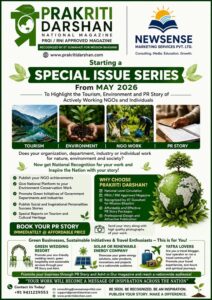
Prakriti Darshan – Nature and Environment Magazine (www.prakritidarshan.com) and Prakriti Darshan :International Journal of Environment Science & Multidisciplinary Studies (www.prakritidarshanjournal.com) are global initiatives dedicated to:
- 🌱 Promoting environmental awareness and education.
- 🌎 Supporting United Nations Sustainable Development Goals (SDGs).
- 🦋 Highlighting the role of climate action, biodiversity conservation, renewable energy, eco-friendly practices, and sustainable living.
- 📚 Encouraging research and publications through our international journal.
- 🌳 Driving grassroots action through plantation, seminars, and workshops in schools, institutions, and communities.
Our Global Objectives
We aim to:
- Publish and distribute our environmental magazine free of cost worldwide to increase public awareness.
- Extend the magazine into multiple languages to reach diverse populations.
- Organize environmental seminars, conferences, and workshops both online and offline at schools, universities, and community levels.
- Build a platform for research, policy dialogue, and public participation in environmental conservation.
Our Humble Appeal
We invite Governments, UNEP, UNDP, UNESCO, FAO, IUCN, World Bank, international NGOs, corporates, green businesses, and philanthropists to come forward and strengthen this movement by:
✅ Sponsorship & Advertisements – Support us in reaching millions with environmental knowledge.
✅ Membership Programs – Join our network of eco-conscious individuals and organizations.
✅ Funding Support – Help us distribute Prakriti Darshan Magazine worldwide free of cost.
✅ Collaborations – Partner with us to host environmental events, campaigns, and research projects.
✅ Publishing with Us – Academics, researchers, and writers are invited to publish in our journal to spread innovative ideas globally.
Why Support Us?
By supporting Prakriti Darshan, you directly contribute to:
- SDG 4: Quality Education – spreading environmental education.
- SDG 13: Climate Action – mobilizing communities against climate change.
- SDG 15: Life on Land – promoting biodiversity conservation and plantation drives.
- SDG 17: Partnerships for the Goals – building a global movement through collaboration.
Together, We Can Create Change
Your support will help us expand our reach globally, develop multi-language editions, train young eco-leaders, and inspire millions to protect our only home—Planet Earth.
🌿 Let us join hands to create a world where environment and humanity coexist in harmony.
📩 Contact us through our portals:
- 🌐 www.prakritidarshan.com
- 🌐 www.prakritidarshanjournal.com
- WhatsApp :+91-8191903650 & +91-8191903651
- E mail : support@prakritidarshan.com & editor@prakritidarshanjournal.com
📢 Join the movement – Sponsor, Advertise, Become a Member, Publish, and Support Awareness Campaigns.
👉 Prakriti Darshan is not just a magazine—it is a voice for the planet. With your partnership, we can make it louder, stronger, and global.
Click for more information
- Visit www.prakritidarshan.com for Free Magazine ,Free membership benefits ,offered price magazine @ Rs.1 or Rs.11 only and more ……
Donate for “Hari Ho Vashundhara & Har school Hariyali “ Plantation campaign Associated Partner NGO :GDSS NGOwww.gdssngo.org
🎗️Sponsor Prakriti Darshan Magazine – Support our environment mission.
📚 Explore the Environment Magazine – Read our latest and past issues.
✍️ Read Editor’s Article or Blog – Insightful thoughts from our editorial desk.
🌱 Join Membership – Be part of India’s leading green community.
🤝 Become an NGO Impact Story Partner – Share your grassroots impact nationwide.
🏢 Become a Company Partner – Showcase your CSR, ESG, or sustainability work.
👤 Become an Individual Partner – Volunteer, write, and raise your green voice.
📢 Advertise with Us – Reach eco-conscious readers across India.
BALA DATT SHARMA,
MANAGING EDITOR ,
PRAKRITI DARSHAN-NATURE AND ENVIRONMENT MAGAZINE