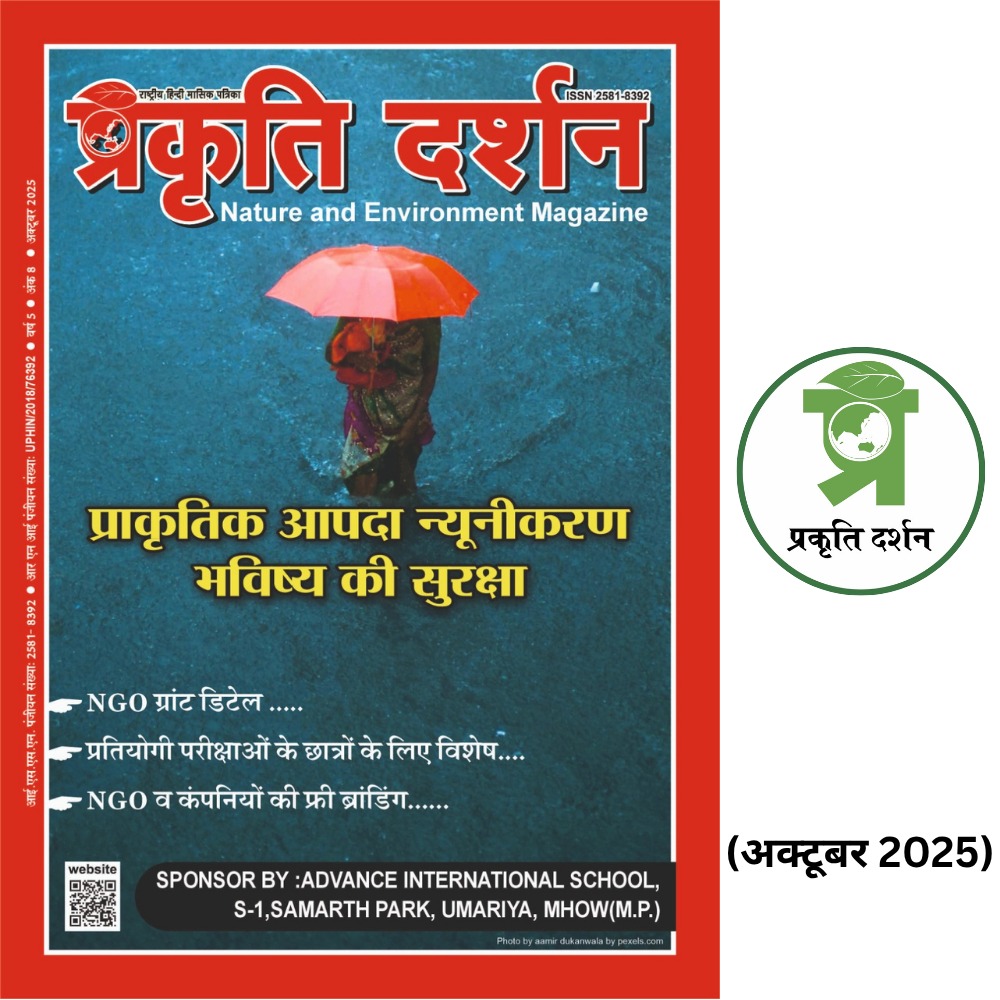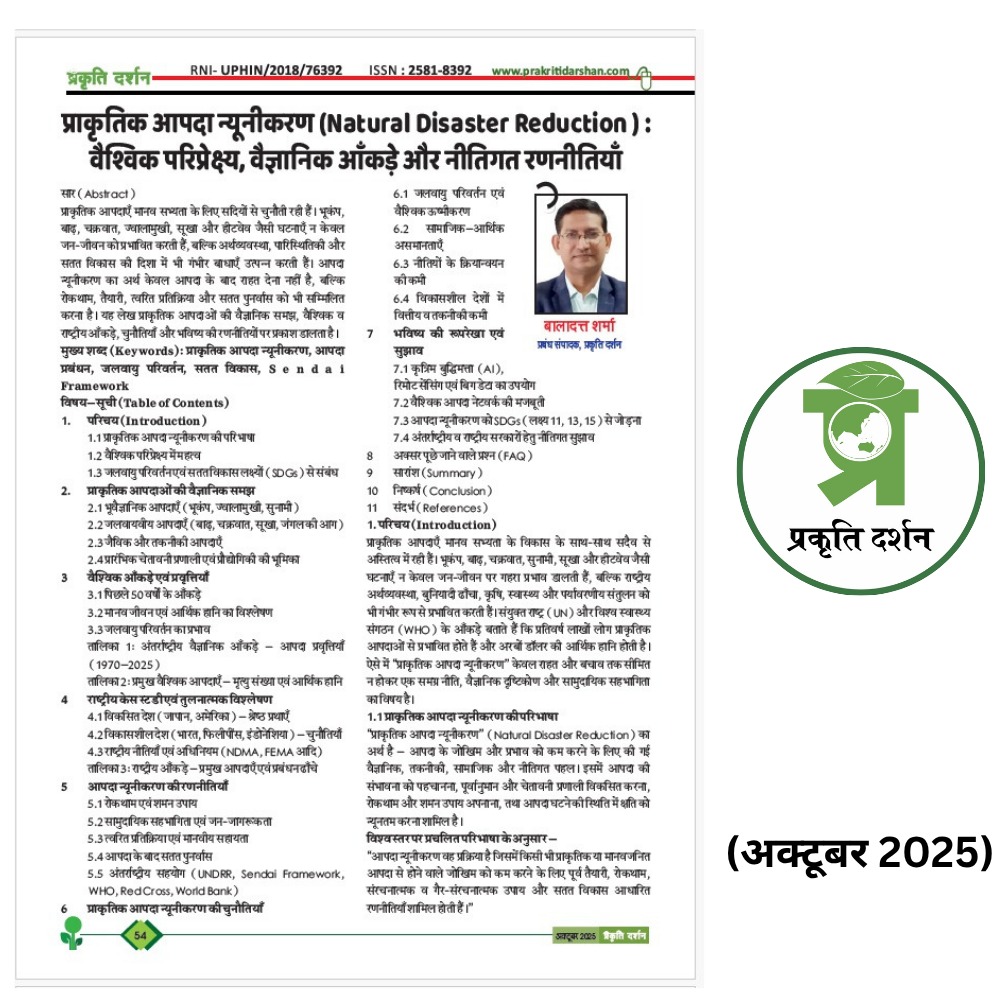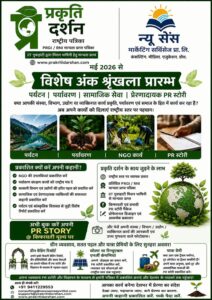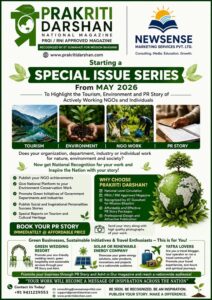
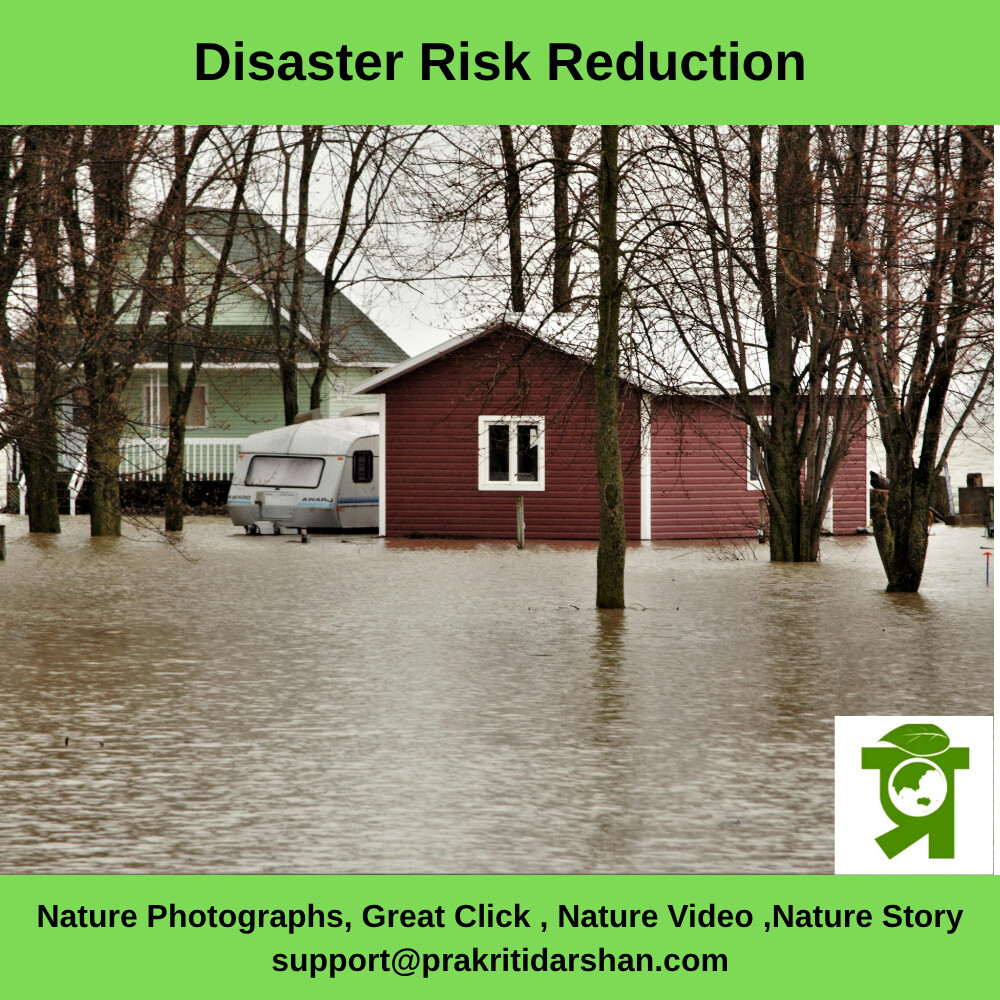
Every year on 13th October, the world observes the United Nations International Day for Disaster Risk Reduction (IDDRR) to raise global awareness about reducing disaster risks, saving lives, and building resilient communities. In 2025, as the climate crisis accelerates and natural disasters multiply in intensity, the theme of “Disaster Risk Reduction” becomes even more relevant. This year, Prakriti Darshan – Nature & Environment Magazine, through its October 2025 issue, highlights this critical global agenda by connecting science, community, and sustainability. The magazine’s special edition focuses on disaster management, natural calamities, climate resilience, and environmental responsibility, offering valuable insights for NGOs, environmentalists, researchers, students, and corporate CSR entities.
Introduction: The Urgency of Disaster Risk Reduction
Disaster risk reduction (DRR) means understanding, managing, and minimizing the risks of natural and human-induced disasters. The goal is to build societies capable of anticipating, absorbing, and recovering from disasters while protecting both people and the planet.
The UN General Assembly established the International Day for Disaster Risk Reduction in 1989, encouraging every country to build a culture of prevention and preparedness. In recent decades, climate change, deforestation, urban expansion, and environmental negligence have increased the frequency and intensity of disasters — from floods in India and Pakistan to wildfires in California and earthquakes across Asia’s seismic zones.
The Sendai Framework for Disaster Risk Reduction (2015–2030) remains the world’s blueprint for resilience. Its four priorities—understanding risk, strengthening governance, investing in resilience, and enhancing preparedness—serve as guiding principles for governments, NGOs, and communities.
Why 13th October Matters: A Global Call for Action
On this day, the UN invites nations to evaluate their progress toward risk prevention, adaptation, and resilience. In 2025, global temperatures have surpassed 1.5°C above pre-industrial levels, intensifying extreme weather events. From Himalayan landslides and Himalayan glacier retreats to the cyclones in coastal India and rising ocean levels, the need for disaster risk reduction has become a planetary priority.
By observing this day with Prakriti Darshan, readers are joining a global dialogue that aligns environmental education with practical solutions. The magazine’s October 2025 issue exemplifies this mission—combining data, research, human stories, and scientific insight into one unified voice for nature.
Inside the October 2025 Issue of Prakriti Darshan
Sponsored by Advance International School, Mhow (M.P.), this special edition presents leading voices on disaster science and sustainable living.
Issue Index Highlights
- Natural Disasters: Forms & Challenges – Dr. Raj Kumar
- National Disaster Management & Policy – Gaurishankar Vaidya ‘Vinamra’
- Tsunami Prediction & Science – Namita Vaishya
- Natural Disaster Risk Reduction – Bala Datt Sharma (Special Editorial)
- NGO Grants & Opportunities – PD Feature Team
- SENDAI Framework -Aparna Vishwanathan
- Environmental Poetry & Reflections – Dr. Vibha Singh, Dr. Poonam Jain, Ashish Dashottar , Gajendra Pal Sngh ,Garima Sanjay , Uma Vyas , Sameep Jain, Kabeer Sanjay & others
Each feature connects scientific analysis with human experience, making this edition a guide for policymakers, students, and CSR leaders.
The Power of Awareness and Education
One of the greatest tools in disaster risk reduction is awareness. The October 2025 issue of Prakriti Darshan demonstrates how education and preparedness are key to saving lives. The stories from Himachal, Uttarakhand, and Bihar floods reveal not only the scale of destruction but also the courage of communities rebuilding from the ground up.
Through vivid articles like “You Cannot Stop the Storm, But You Can Strengthen the Shelter,” the issue encourages local capacity building, eco-friendly construction, and nature-based solutions.
For students and academic institutions, this issue serves as a reference for environmental science, geography, and sustainable development studies—bridging textbook theory with real-world resilience.
Disaster Risk Reduction: From Policy to Practice
1. Understanding the Risk
Each disaster—earthquake, flood, cyclone, wildfire, or drought—has unique risk parameters. Scientific understanding, mapping, and early warning systems are the first steps.
For instance, the Indian Meteorological Department (IMD) and National Disaster Management Authority (NDMA) have advanced predictive models that can warn citizens days before cyclones or heavy rains.
2. Investing in Resilience
The UN encourages investment in climate-resilient infrastructure. Green architecture, natural barriers (like mangroves and forests), and sustainable cities reduce the economic cost of disasters.
3. Community Participation
Disaster management is not only about governments—it is a community-driven process. Local NGOs, schools, and volunteers play a vital role in awareness campaigns and first-response systems.
4. Sustainable Development and DRR
Sustainable Development Goals (SDGs)—especially Goal 11 (Sustainable Cities) and Goal 13 (Climate Action)—interlink directly with disaster risk reduction.Without integrating DRR, achieving sustainability is impossible.
How the October 2025 Issue Benefits You
🌱 For NGOs
- Access grants, CSR partnerships, and branding opportunities.
- Learn disaster preparedness models and sustainable community initiatives.
- Get featured in upcoming November & December 2025 issues under Free Branding Offer.
📚 For Students and Researchers
- Valuable for research papers, environmental projects, and competitive exams.
- Indexed topics connect with Sendai Framework, SDGs, and climate change models.
- Helps in building academic awareness about eco-disaster management.
🌍 For Environmentalists and CSR Companies
- Opportunity to publish awareness articles, advertise green products, and support campaigns.
- Reach a network of eco-conscious readers, educators, and NGOs through Prakriti Darshan’s digital & downloadable global platform.
- Promote your CSR sustainability initiatives in the November-December 2025 free branding window.
📰 For Readers and Nature Lovers
- Inspiring human stories about resilience, hope, and environmental stewardship.
- A chance to become part of India’s leading eco-digital movement with a meaningful cause—“Protect Nature, Empower Future.”
Celebrate with Prakriti Darshan: A Global Environmental Platform
This 13th October, Prakriti Darshan invites every individual, NGO, and company to celebrate UN Disaster Risk Reduction Day not just by remembering disasters, but by acting for prevention and awareness.
By purchasing and promoting the October 2025 Issue, readers directly support:
- Tree plantation and eco-restoration projects (₹100 from each copy supports plantation).
- Environmental journalism and grassroots education.
- Disaster awareness among schools and local bodies.
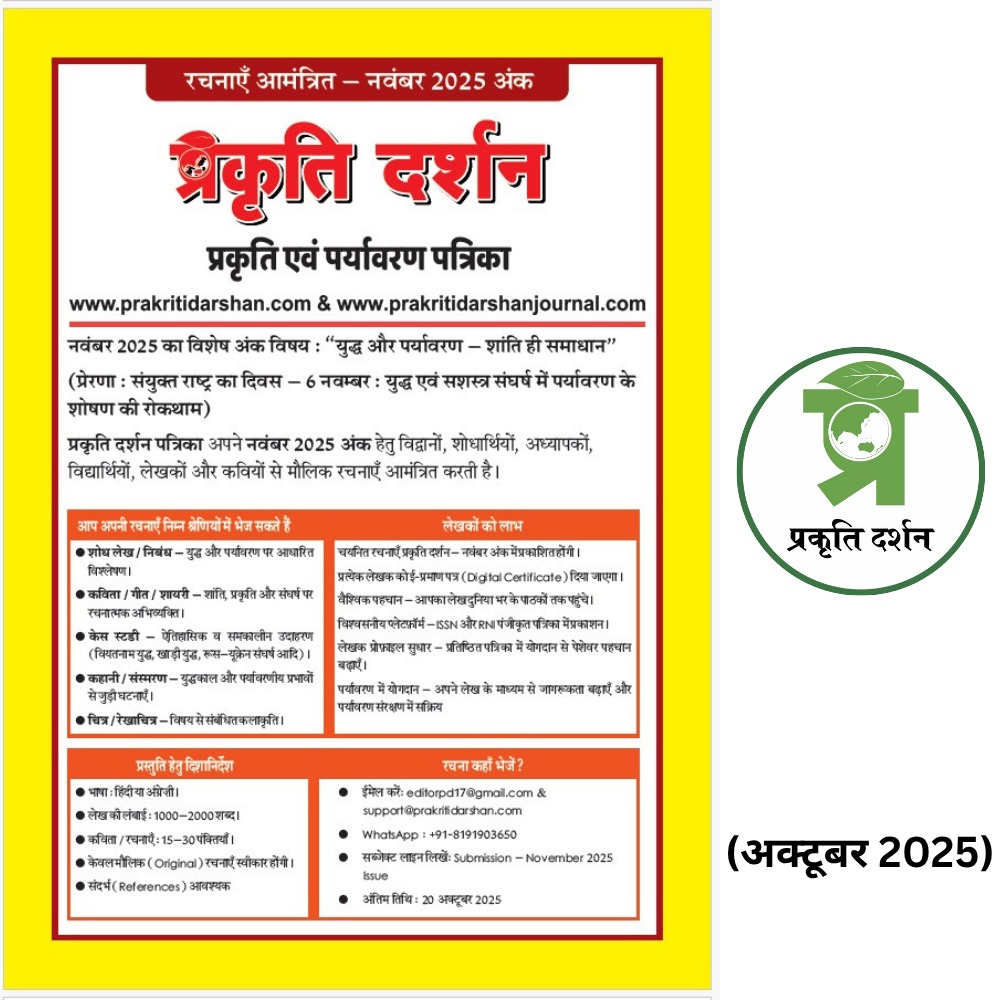
Free Branding & Participation Call
In a rare environmental outreach initiative, Prakriti Darshan Magazine offers a Free Branding Opportunity for:
- NGOs working in environment, education, and health.
- CSR companies supporting green causes.
- Individuals and eco-entrepreneurs promoting sustainable living.
Your logo, advertisement, or project summary will be featured in the November & December 2025 issues, along with visibility on the official website and social media channels of the magazine.
👉 Visit www.prakritidarshan.com
👉 Email: editorpd17@gmail.com | support@prakritidarshan.com
👉 WhatsApp/Call: +91-9411229553
Join this environmental movement today — purchase your October 2025 issue and contribute to a safer, greener planet.
Summary
The UN International Day for Disaster Risk Reduction reminds humanity that prevention saves more lives than reaction. Climate change is not just a weather issue—it is a development issue, a human survival issue.
Through education, awareness, and scientific engagement, we can reduce the risk, strengthen the resilience, and protect our only home — Earth.
The October 2025 Issue of Prakriti Darshan serves as both a tribute and a tool for change. With articles addressing natural disasters, national policies, and environmental education, it’s a valuable resource for every eco-conscious citizen.
Readers, NGOs, and companies are urged to take this opportunity to celebrate October 13th with action—not just words.
Frequently Asked Questions (FAQs)
Q1. What is the purpose of the UN International Day for Disaster Risk Reduction?
It promotes global awareness and action to reduce the impact of disasters through preparedness and resilience.
Q2. What is Disaster Risk Reduction (DRR)?
DRR is the systematic approach of identifying, assessing, and reducing disaster risks through prevention, mitigation, and preparedness.
Q3. Why is 13 October important for India?
Because India faces frequent floods, cyclones, and earthquakes; this day reminds citizens to adopt preventive measures at every level.
Q4. What is the Sendai Framework?
A global UN agreement (2015-2030) that sets four priorities for reducing disaster risk and losses in lives and livelihoods.
Q5. How does climate change relate to disaster risk?
Rising temperatures intensify floods, droughts, and storms, making DRR an essential part of climate adaptation.
Q6. What role do NGOs play in DRR?
They train communities, raise awareness, mobilize volunteers, and bridge government policies with local action.
Q7. What is community-based disaster risk management?
It empowers local citizens to identify hazards and prepare action plans suited to their geography and resources.
Frequently Asked Questions (FAQs)
Q8. How can students contribute to disaster risk reduction?
By joining eco-clubs, participating in mock drills, and spreading awareness through social media and research projects.
Q9. What is the economic benefit of DRR?
For every $1 spent on prevention, societies save an average of $7 in recovery and reconstruction costs.
Q10. Which Indian agencies work for disaster management?
The National Disaster Management Authority (NDMA), State Disaster Authorities, and Indian Meteorological Department (IMD).
Q11. How can technology help in DRR?
Through satellite imagery, AI-based forecasts, drones for rescue, and mobile alert apps for citizens.
Q12. What is eco-friendly reconstruction?
Building with local materials, energy-efficient designs, and green spaces to reduce future risks.
Q13. How does Prakriti Darshan support disaster risk awareness?
By publishing research articles, case studies, and special issues that educate communities and policymakers.
Q14. Can corporates get involved through CSR?
Yes, companies can sponsor tree plantation, training workshops, and magazine issues to fulfil CSR objectives.
Q15. How to avail the Free Branding Offer in Prakriti Darshan?
Email your logo and brief project details to editorpd17@gmail.com before October 30 to feature in the Nov–Dec 2025 issues.
Q16. What is the price and purpose of the October 2025 issue?
Rs 300 (₹25 magazine + ₹275 for plantation support). Each purchase helps environmental projects in India.
Q17. How does DRR relate to the SDGs?
It supports Goal 11 (Sustainable Cities) and Goal 13 (Climate Action), ensuring safety and resilience for all.
Conclusion: Together for a Resilient Planet
As we mark 13th October – UN Disaster Risk Reduction Day, let’s reaffirm our collective responsibility. Disasters don’t wait, but preparedness can save generations.
Let this day inspire every citizen, NGO, student, and policymaker to act with purpose.
🌿 Celebrate with Prakriti Darshan – Nature & Environment Magazine.