
The Fisherman and the Dolphin: A Friendship in the Ocean : Human-wildlife relationships are often portrayed as conflicts, yet there are rare and inspiring examples where both species thrive together. One of the most fascinating is found in the coastal waters of Laguna, Brazil, where fishermen and wild dolphins have cooperated for over a century. This partnership is not only a cultural treasure but also an ecological model of sustainability and coexistence.
The Story of Mutual Trust
Every day, as fishermen stand in waist-deep water, dolphins approach the shoreline in coordinated groups. These dolphins herd schools of fish, mainly mullet (Mugil spp.), toward the waiting humans. At a precise moment, the dolphins give a clear signal—such as a dive, tail slap, or sudden body roll—indicating when the fishermen should cast their nets.
The result is extraordinary:
- Fishermen catch more fish than they would alone.
- Dolphins benefit from feeding on the disoriented fish that escape the nets.
- Neither side loses; both gain from cooperation.
This form of cooperative fishing is so unique that it has been documented by marine biologists as a rare case of mutualism between humans and wild cetaceans.
Scientific Insights
Studies conducted in Laguna reveal fascinating data:
| Aspect | Observation | Source |
| Duration of cooperation | Over 140 years of recorded history | Simões-Lopes, 1991 |
| Species involved | Bottlenose dolphins (Tursiops truncatus) | Marine Mammal Science |
| Fishermen’s catch | Up to 17 times higher with dolphin cooperation | Cantor et al., 2015 |
| Dolphin survival | Higher survival rates compared to non-cooperative groups | Wildlife Conservation Research |
Research shows that dolphins actively choose to engage in this behavior, suggesting it is culturally transmitted among dolphin pods—similar to traditions passed down among humans.
Cultural Significance
For the fishermen of Laguna, dolphins are not just helpers but guardians of the sea. Stories are passed down through generations about families of dolphins who return year after year. Local children grow up learning to respect and protect these marine companions, ensuring that the bond is preserved.
This cooperation is so deeply rooted in the community that it has shaped their identity. In fact, in 2011, this human-dolphin interaction was recognized as part of Brazil’s intangible cultural heritage, highlighting its importance beyond just fishing.
Environmental Lessons for the Future
At a time when industrial overfishing and climate change threaten marine ecosystems, this story carries urgent lessons:
- Sustainable Practices Work – Instead of exploiting nature, harmony with wildlife can lead to long-term abundance.
- Biodiversity Conservation – Protecting dolphins ensures healthier fish populations and balanced ecosystems.
- Cultural-Ecological Link – Traditional knowledge combined with ecological respect can safeguard both human livelihoods and wildlife survival.
The fishermen and dolphins of Brazil prove that humans do not always have to be at odds with nature. Coexistence is possible when guided by respect and patience.
Frequently Asked Questions (FAQs) :The Fisherman and the Dolphin
1. Do dolphins really help fishermen in Brazil?
Yes. In Laguna, wild bottlenose dolphins have cooperated with fishermen for more than a century. They signal the fishermen to cast their nets, helping both humans and dolphins catch more fish.
2. Why don’t the dolphins get trapped in the nets?
The dolphins are highly intelligent and skilled hunters. They approach close enough to herd fish but avoid entanglement by signaling the right moment for fishermen to act.
3. What kind of fish do they usually catch?
The main species involved is the mullet (Mugil spp.), a fish that moves in large schools, making it easier for dolphins to herd them toward the shore.
4. Is this cooperation found anywhere else in the world?
Similar human-wildlife fishing cooperation exists in the Irrawaddy dolphin fisheries of Myanmar and the Amazon River dolphin interactions in Brazil, but the Laguna case is the most well-documented and enduring.
5. What lesson does this story teach us?
It shows that humans and wildlife can live in harmony. By respecting natural behaviors and building trust, both species can thrive without harming the environment.
Conclusion :The Fisherman and the Dolphin
The story of the fishermen and the dolphins is more than folklore—it is a living scientific case study and a moral lesson for humanity. It shows us that when humans and wildlife trust each other, survival becomes cooperation, and exploitation transforms into harmony.
In the face of global biodiversity loss, this partnership stands as a beacon of hope, reminding us that the future of our planet lies not in domination, but in collaboration with nature.
References :The Fisherman and the Dolphin
- Simões-Lopes, P. C. (1991). Symbiotic relationship between bottlenose dolphins and the mullet fishery in southern Brazil. Marine Mammal Science.
- Cantor, M., et al. (2015). Cultural transmission and individual variation in cooperative foraging between dolphins and humans. Biology Letters, Royal Society.
- da Silva, V. M. F., & Best, R. C. (1996). Freshwater dolphin/fishermen interactions in the Central Amazon. Amazoniana.
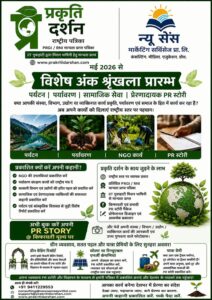
Global Appeal for Support: Prakriti Darshan – Nature and Environment Magazine & Journal
Dear Respected Leaders, Organizations, and Changemakers,
At a time when the world faces unprecedented challenges of climate change, biodiversity loss, deforestation, pollution, and global warming, collective action has become the need of the hour. The responsibility of protecting our planet cannot rest on a few shoulders—it must be a shared mission across governments, global institutions, businesses, academia, and communities.
About Us
Prakriti Darshan – Nature and Environment Magazine (www.prakritidarshan.com) and Prakriti Darshan :International Journal of Environment Science & Multidisciplinary Studies (www.prakritidarshanjournal.com) are global initiatives dedicated to:
- 🌱 Promoting environmental awareness and education.
- 🌎 Supporting United Nations Sustainable Development Goals (SDGs).
- 🦋 Highlighting the role of climate action, biodiversity conservation, renewable energy, eco-friendly practices, and sustainable living.
- 📚 Encouraging research and publications through our international journal.
- 🌳 Driving grassroots action through plantation, seminars, and workshops in schools, institutions, and communities.
Our Global Objectives
We aim to:
- Publish and distribute our environmental magazine free of cost worldwide to increase public awareness.
- Extend the magazine into multiple languages to reach diverse populations.
- Organize environmental seminars, conferences, and workshops both online and offline at schools, universities, and community levels.
- Build a platform for research, policy dialogue, and public participation in environmental conservation.
Our Humble Appeal
We invite Governments, UNEP, UNDP, UNESCO, FAO, IUCN, World Bank, international NGOs, corporates, green businesses, and philanthropists to come forward and strengthen this movement by:
✅ Sponsorship & Advertisements – Support us in reaching millions with environmental knowledge.
✅ Membership Programs – Join our network of eco-conscious individuals and organizations.
✅ Funding Support – Help us distribute Prakriti Darshan Magazine worldwide free of cost.
✅ Collaborations – Partner with us to host environmental events, campaigns, and research projects.
✅ Publishing with Us – Academics, researchers, and writers are invited to publish in our journal to spread innovative ideas globally.
Why Support Us?
By supporting Prakriti Darshan, you directly contribute to:
- SDG 4: Quality Education – spreading environmental education.
- SDG 13: Climate Action – mobilizing communities against climate change.
- SDG 15: Life on Land – promoting biodiversity conservation and plantation drives.
- SDG 17: Partnerships for the Goals – building a global movement through collaboration.
Together, We Can Create Change
Your support will help us expand our reach globally, develop multi-language editions, train young eco-leaders, and inspire millions to protect our only home—Planet Earth.
🌿 Let us join hands to create a world where environment and humanity coexist in harmony.
📩 Contact us through our portals:
- 🌐 www.prakritidarshan.com
- 🌐 www.prakritidarshanjournal.com
- WhatsApp :+91-8191903650 & +91-8191903651
- E mail : support@prakritidarshan.com & editor@prakritidarshanjournal.com
📢 Join the movement – Sponsor, Advertise, Become a Member, Publish, and Support Awareness Campaigns.
👉 Prakriti Darshan is not just a magazine—it is a voice for the planet. With your partnership, we can make it louder, stronger, and global.
Click for more information
- Visit www.prakritidarshan.com for Free Magazine ,Free membership benefits ,offered price magazine @ Rs.1 or Rs.11 only and more ……
Donate for “Hari Ho Vashundhara & Har school Hariyali “ Plantation campaign Associated Partner NGO :GDSS NGOwww.gdssngo.org
🎗️Sponsor Prakriti Darshan Magazine – Support our environment mission.
📚 Explore the Environment Magazine – Read our latest and past issues.
✍️ Read Editor’s Article or Blog – Insightful thoughts from our editorial desk.
🌱 Join Membership – Be part of India’s leading green community.
🤝 Become an NGO Impact Story Partner – Share your grassroots impact nationwide.
🏢 Become a Company Partner – Showcase your CSR, ESG, or sustainability work.
👤 Become an Individual Partner – Volunteer, write, and raise your green voice.
📢 Advertise with Us – Reach eco-conscious readers across India.
BALA DATT SHARMA,
MANAGING EDITOR ,
PRAKRITI DARSHAN-NATURE AND ENVIRONMENT MAGAZINE