
Introduction: Meet the Majestic Whale Shark
When you hear the term “whale shark,” it might sound like a confusing mix of two giant marine creatures — the whale and the shark. The whale shark is neither a whale nor a dangerous predator. Its largest living species of fish and one of the most gentle giants of the sea.
Despite its size, the whale shark is a peaceful plankton feeder, gracefully roaming the tropical oceans. This article explores the life of whale sharks, their unique biology, habitat, behavior, and the growing need for their protection.
What Is a Whale Shark?
Scientific Name: Rhincodon typus
Average Size: Up to 40 feet (12 meters)
Weight: Can exceed 20 tons
Lifespan: 70–100 years
IUCN Status: Endangered
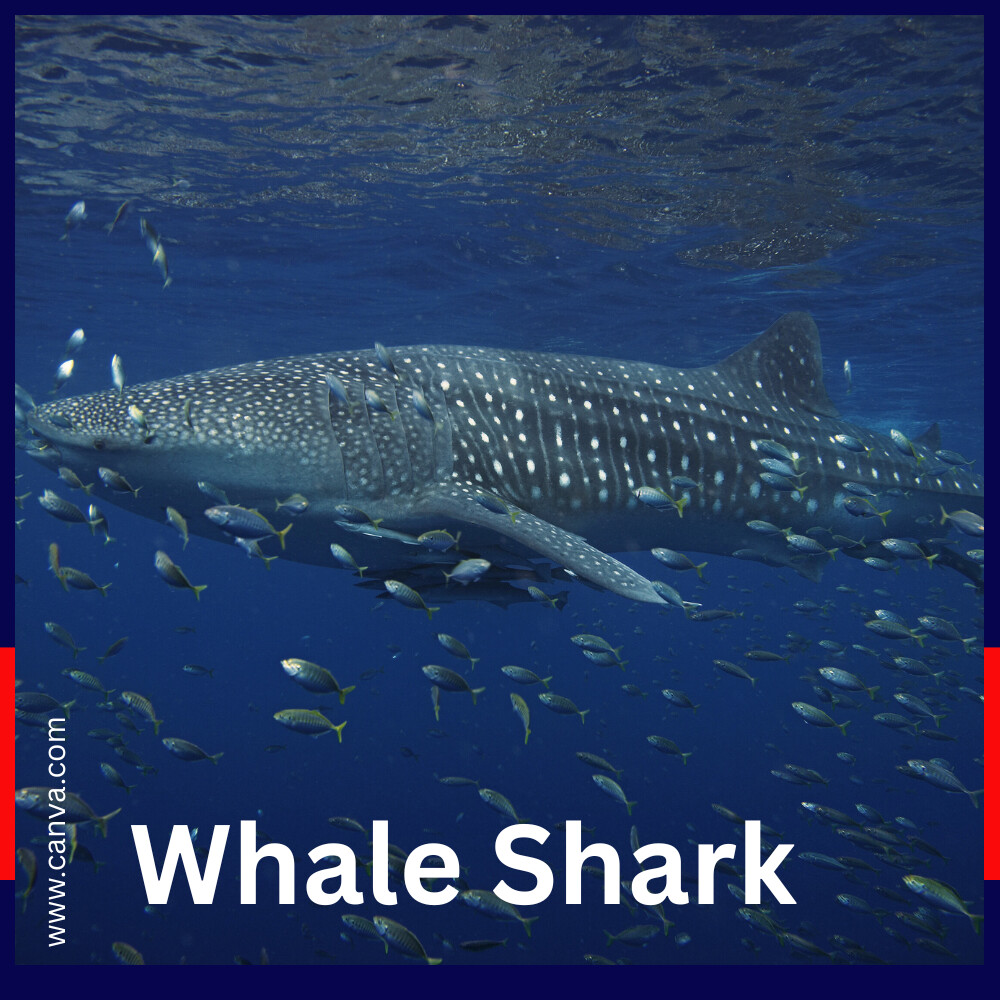
The whale shark is a filter-feeding carpet shark and holds the record for being the largest fish species alive today. It has a distinctive wide, flat head, a mouth full of tiny teeth, and a pattern of white spots and stripes on its gray-blue body.
Where Do Whale Sharks Live?
Whale sharks are found in warm, tropical oceans around the world. Common locations include:
Indian Ocean (Around Maldives and Seychelles)
Pacific Ocean (Philippines, Australia, Mexico)
Atlantic Ocean (Caribbean regions)
They often migrate thousands of kilometers in search of food, particularly to plankton-rich waters.
What Do Whale Sharks Eat?
Contrary to their enormous size, whale sharks have a surprisingly gentle feeding behavior.
They are filter feeders, consuming:
Plankton
Krill
Small fish
Fish eggs
Algae
They swim with their mouths wide open and filter out food using their gill rakers. A whale shark can filter over 6,000 liters of water per hour!
Are Whale Sharks Dangerous?
whale sharks pose no threat to humans.
These gentle giants are slow, peaceful, and often tolerate the presence of divers swimming nearby. However, it’s important not to touch or ride them, as this can cause them stress and potentially harm their delicate skin.
However, touching or riding them is discouraged as it can cause them stress and damage their skin.
Join Membership – Be part of India’s leading green community.
Why Are Whale Sharks Endangered?
The IUCN lists whale sharks as endangered, and their population is declining due to:
Overfishing and accidental bycatch
Ship strikes during migration
Plastic pollution and ocean debris
Habitat loss and climate change
Unregulated tourism
Despite being protected in many countries, illegal fishing and lack of enforcement still threaten their survival.
Whale Shark Conservation Efforts
Organizations and governments are working to conserve whale sharks through:
Marine protected areas (like Ningaloo Reef, Australia)
Research and satellite tagging
Tourism guidelines and eco-tourism models
Global agreements like CITES
Awareness campaigns are also helping people understand the importance of whale sharks in maintaining marine biodiversity.
Sponsor Prakriti Darshan Magazine – Support our environment mission.
Fascinating Facts About Whale Sharks You Probably Didn’t Know
Whale sharks are full of surprises! These ocean giants aren’t just massive — they’re marvels of nature with incredible traits that make them truly special. Here are some jaw-dropping facts that reveal just how extraordinary they are:
Just like human fingerprints, every whale shark has a unique pattern of white spots and stripes on its body — no two Whale Sharks are the same!
These deep-sea wanderers are capable of diving to depths of over 1,000 meters, exploring parts of the ocean humans have barely seen.
With a lifespan stretching up to 100 years, whale sharks are among the longest-living fish species on Earth.
Despite their size, they are slow and graceful swimmers, cruising at a leisurely pace of around 3 miles per hour.
Officially recorded the largest whale shark and measured a stunning 61.7 feet or 18.8 meters in length .
Conclusion: Protecting the Ocean’s Gentle Giant : Whale Shark
The whale shark isn’t just the largest fish in the ocean — it’s a symbol of balance, beauty, and biodiversity in our marine ecosystems. Its slow, graceful movements, peaceful nature, and ancient lineage remind us of the delicate harmony that exists beneath the waves.
But today, that harmony is under threat. From overfishing and climate change to plastic pollution and unregulated tourism, human actions are putting these majestic creatures at risk. Despite their global protection status, enforcement gaps continue to endanger their existence.
Safeguarding the whale shark isn’t just about protecting one species — it’s about maintaining the overall health and balance of our oceans. Whether through responsible tourism, reducing plastic use, supporting marine conservation efforts, or simply spreading awareness, each of us has a role to play.
Let’s ensure that future generations don’t have to learn about the whale shark only through history books. It’s time to act — to protect, preserve, and honor the gentle giant of the sea.
Advertise with Us – Reach eco-conscious readers across India.
FAQs About Whale Sharks
Q1. Can you swim with whale sharks?
Ans. Yes, in many places like the Philippines and Mexico, eco-tourism programs allow swimming under controlled guidelines.
Q2. Are whale sharks mammals?
Ans. No, whale sharks are fish — specifically, the largest living species of fish.
Q3. Do whale sharks bite?
Ans. No, they don’t bite or have aggressive behavior. They filter-feed and pose no threat to humans.
Q4. How can I help conserve whale sharks?
Ans. Support eco-friendly tourism, avoid single-use plastics, donate to marine conservation NGOs, and spread awareness.
Global Appeal for Support: Prakriti Darshan – Nature and Environment Magazine & Journal
Dear Respected Leaders, Organizations, and Changemakers,
At a time when the world faces unprecedented challenges of climate change, biodiversity loss, deforestation, pollution, and global warming, collective action has become the need of the hour. The responsibility of protecting our planet cannot rest on a few shoulders—it must be a shared mission across governments, global institutions, businesses, academia, and communities.
About Us
Prakriti Darshan – Nature and Environment Magazine (www.prakritidarshan.com) and Prakriti Darshan :International Journal of Environment Science & Multidisciplinary Studies (www.prakritidarshanjournal.com) are global initiatives dedicated to:
- 🌱 Promoting environmental awareness and education.
- 🌎 Supporting United Nations Sustainable Development Goals (SDGs).
- 🦋 Highlighting the role of climate action, biodiversity conservation, renewable energy, eco-friendly practices, and sustainable living.
- 📚 Encouraging research and publications through our international journal.
- 🌳 Driving grassroots action through plantation, seminars, and workshops in schools, institutions, and communities.
Our Global Objectives
We aim to:
- Publish and distribute our environmental magazine free of cost worldwide to increase public awareness.
- Extend the magazine into multiple languages to reach diverse populations.
- Organize environmental seminars, conferences, and workshops both online and offline at schools, universities, and community levels.
- Build a platform for research, policy dialogue, and public participation in environmental conservation.
Our Humble Appeal
We invite Governments, UNEP, UNDP, UNESCO, FAO, IUCN, World Bank, international NGOs, corporates, green businesses, and philanthropists to come forward and strengthen this movement by:
✅ Sponsorship & Advertisements – Support us in reaching millions with environmental knowledge.
✅ Membership Programs – Join our network of eco-conscious individuals and organizations.
✅ Funding Support – Help us distribute Prakriti Darshan Magazine worldwide free of cost.
✅ Collaborations – Partner with us to host environmental events, campaigns, and research projects.
✅ Publishing with Us – Academics, researchers, and writers are invited to publish in our journal to spread innovative ideas globally.
Why Support Us?
By supporting Prakriti Darshan, you directly contribute to:
- SDG 4: Quality Education – spreading environmental education.
- SDG 13: Climate Action – mobilizing communities against climate change.
- SDG 15: Life on Land – promoting biodiversity conservation and plantation drives.
- SDG 17: Partnerships for the Goals – building a global movement through collaboration.
Together, We Can Create Change
Your support will help us expand our reach globally, develop multi-language editions, train young eco-leaders, and inspire millions to protect our only home—Planet Earth.
🌿 Let us join hands to create a world where environment and humanity coexist in harmony.
📩 Contact us through our portals:
- 🌐 www.prakritidarshan.com
- 🌐 www.prakritidarshanjournal.com
- WhatsApp :+91-8191903650 & +91-8191903651
- E mail : support@prakritidarshan.com & editor@prakritidarshanjournal.com
📢 Join the movement – Sponsor, Advertise, Become a Member, Publish, and Support Awareness Campaigns.
👉 Prakriti Darshan is not just a magazine—it is a voice for the planet. With your partnership, we can make it louder, stronger, and global.
Click for more information
- Visit www.prakritidarshan.com for Free Magazine ,Free membership benefits ,offered price magazine @ Rs.1 or Rs.11 only and more ……
- 🎗️Sponsor Prakriti Darshan Magazine – Support our environment mission.
- 📚 Explore the Environment Magazine – Read our latest and past issues.
- ✍️ Read Editor’s Article or Blog – Insightful thoughts from our editorial desk.
- 🌱 Join Membership – Be part of India’s leading green community.
- 🤝 Become an NGO Impact Story Partner – Share your grassroots impact nationwide.
- 🏢 Become a Company Partner – Showcase your CSR, ESG, or sustainability work.
- 👤 Become an Individual Partner – Volunteer, write, and raise your green voice.
- 📢 Advertise with Us – Reach eco-conscious readers across India.
- Eco Trails Newsletter
- Donate for “Hari Ho Vashundhara & Har school Hariyali “ Plantation campaign Associated Partner NGO :GDSS NGO www.gdssngo.org
BALA DATT SHARMA,
MANAGING EDITOR ,
PRAKRITI DARSHAN-NATURE AND ENVIRONMENT MAGAZINE